Skip to content

California wildfire information

Claims After a Recent California Wildfire: What the Law Covers and What to Do First

Updated November 11, 2026

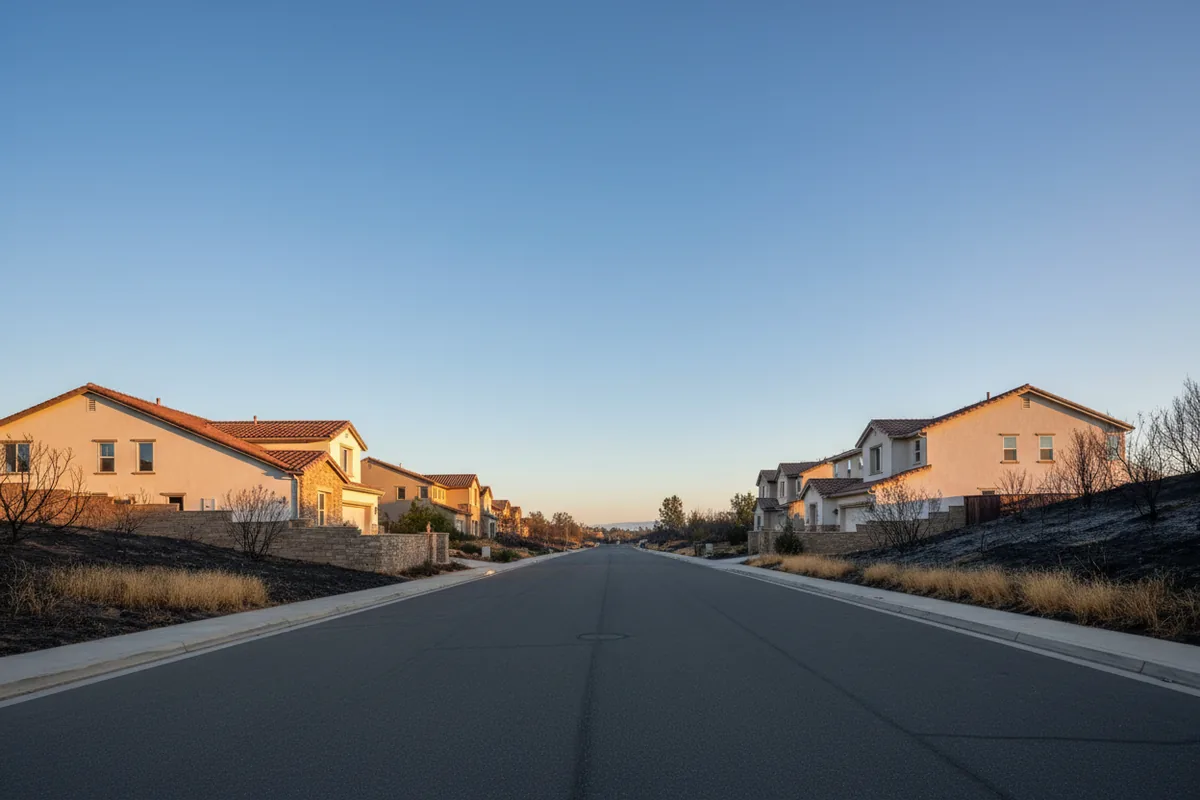
Ash-dusted California hillside homes standing after a wildfire has passed through.
Immediate answer

After a recent California wildfire: 24 months of living expense coverage, a 100-day proof-of-loss floor, how federal aid avoids duplicating insurance, and why the cause comes later.

On this page
  1. If You Are Sorting Out Claims After a Wildfire: What Starts Now and What Takes Longer to Know
  2. Living Expense Coverage While You Cannot Return Home
  3. When Your Records Are Gone: What the Insurer Can and Cannot Require for Proof of Loss After a State of Emergency
  4. When Insurance Falls Short: What Federal Disaster Assistance Under 42 U.S.C. § 5174 Can and Cannot Cover
  5. Wondering Who Is to Blame? Why the Cause of a Fire Matters and Takes Time to Establish
  6. What Records Made Now Can Mean for a Later Claim
  7. Frequently asked questions
  8. Sources

In the first weeks after a California wildfire, two kinds of claims usually exist side by side. Insurance claims and requests for disaster aid can begin right away, and California law sets specific protections once a state of emergency is declared. A claim against whoever may have caused the fire depends on finding the cause, which takes time.

Most people facing the days right after a fire are not thinking about lawsuits. They are thinking about where the family will sleep this week, whether the house is still standing, how to replace a child's medication or school clothes, and whether the insurance company will actually pay. Some are also carrying an injury from the smoke or the evacuation, or the loss of someone they love. If that is where you are, this page explains what California law already provides in this early stretch, what can wait, and why the record of these first days may matter for a long time.

If You Are Sorting Out Claims After a Wildfire: What Starts Now and What Takes Longer to Know

After a fire, "a claim" can mean two very different things. The first is a claim on your own coverage: a homeowners or renters policy, and in a declared disaster, federal assistance. These start with the loss itself and do not depend on knowing how the fire began. The second is a civil liability claim, meaning a demand or lawsuit against a person, company or public body whose conduct is alleged to have caused the fire and the harm it did. That second track turns entirely on cause.

The two tracks are separate. Opening an insurance claim does not decide anything about who started a fire, and it does not close the door on a later civil claim if the facts eventually support one. They do share one thing: evidence. The photos, receipts, medical records and notes made now are the same records an insurer asks for this month and the same records that can matter if a civil claim is ever pursued.

Cause is the part that cannot be rushed. Official investigators work to determine where and how a fire started, and where equipment is involved, regulators may look at it as well. Until that work produces findings, no one can say responsibly who, if anyone, may be legally responsible, and this page does not try.

Fires from earlier years are covered on this site's historical claims page, and utility-related cause investigations on its utility investigation page. For an overview of how a California fire case is built once the cause is known, see the page on how a wildfire lawsuit works.

Living Expense Coverage While You Cannot Return Home

California Insurance Code section 2060 sets minimum rules for additional living expense coverage, the part of a homeowners policy that pays the extra costs of living somewhere else, such as a hotel or rental, while your home cannot be lived in. Under California Insurance Code section 2060, when an insured makes a claim for these expenses, the insurer must provide a list of items it believes may be covered. The list may note that it shows only commonly claimed items rather than everything the policy covers.

The stronger protections apply in a declared state of emergency, as defined in section 8558 of the Government Code. The statute states:

"In the event of a covered loss relating to a state of emergency, as defined in Section 8558 of the Government Code, coverage for additional living expenses shall be for a period of no less than 24 months from the inception of the loss, but shall be subject to other policy provisions."

The same subdivision requires an extension of up to 12 more months, for a total of 36, if an insured acting in good faith and with reasonable diligence runs into rebuilding delays beyond their control. The statute names unavoidable permit delays, a lack of construction materials and a lack of available contractors, and says the list is not limited to those. Further six-month extensions are to be given for good cause. An insurer may, instead of paying living expenses, provide a reasonable alternative remedy that fixes the condition keeping the home from being lived in. A planned power shutoff to reduce wildfire risk is not, by itself, covered under this section.

If your home is standing but you are not allowed back, a separate rule may apply. Where a loss does not fall under the 24-month rule, but a state of emergency comes with an order of civil authority, meaning an official order restricting access to the home, related to a covered peril, living expense coverage must be provided for at least two weeks, with further two-week extensions for good cause, subject to other policy provisions. For a family in that position, a copy of the access order can be an important part of the request.

For a family paying for a motel and meals out of savings, these rules can be the difference between holding on and falling behind. The records that usually support this part of a claim include lodging bills, meal and mileage receipts, and a copy or reference to any evacuation or access order. The amount paid depends on the policy itself, and its limits still apply.

When Your Records Are Gone: What the Insurer Can and Cannot Require for Proof of Loss After a State of Emergency

A proof of loss is the formal statement an insurer asks for that describes what was lost and its value. When your home and everything in it may be gone, the request for one can feel impossible to meet. California Insurance Code section 2051.5 addresses the timing.

Under California Insurance Code section 2051.5, after a loss relating to a state of emergency, an insurer may not require proof of loss less than 100 days after the loss. The insurer must also give one or more three-month extensions for good cause when an insured acting in good faith and with reasonable diligence meets a delay beyond their control. The statute's examples, which it says are not the only ones, include delays by the insurer in acknowledging the claim or providing needed forms, instructions and help; a personal property inventory being premature when rebuilding of the main structure has not started; contractors being unavailable to do the work or prepare an estimate; the insured's disability, injury or incapacity; and the insured being unable to reach the property because of government action or hazardous materials posing a health risk.

The same section governs replacement cost. Where a policy pays the cost to repair, rebuild or replace without deducting for depreciation, the insurer pays actual cash value until the property is replaced, then the difference up to the policy limit. After a state-of-emergency loss, the insurer may not set a time limit of less than 36 months from its first actual cash value payment for collecting full replacement cost, subject to the policy limit, and six-month extensions are required for good cause.

These rules matter because a fire often destroys the very papers a claim would normally rely on. Records that sometimes survive anyway include photos stored in the cloud or on phones, emailed receipts and order histories, and bank and credit card statements. Disputes over deadlines and requests are covered on the page about wildfire insurance claim disputes, and personal belongings on the page about contents loss claims.

When Insurance Falls Short: What Federal Disaster Assistance Under 42 U.S.C. § 5174 Can and Cannot Cover

Federal aid to families comes from a specific federal statute, and it starts with a declaration. Under 42 U.S.C. § 5174(a), the President, in consultation with the Governor of a State, may provide financial assistance and, if necessary, direct services to individuals and households who, as a direct result of a major disaster, have necessary expenses and serious needs they are unable to meet through other means. A major disaster declaration is that formal federal designation. Not every fire receives one, and without it this program does not apply.

The same subsection says an individual or household may not be denied certain forms of this assistance solely because they have not applied for or received a loan or other financial help from the Small Business Administration or another federal agency.

If you have insurance, the rule against double payment is the other half of the picture. Under 42 U.S.C. § 5155(a), federal disaster assistance cannot pay for any part of a loss that a person, business or other entity has already been paid for by another program, by insurance, or by any other source; the President, in consultation with the agencies running disaster programs, must assure this.

For a household, that means federal aid is built to reach needs other sources leave unmet, not to pay twice for the same loss. A clear record of what the insurer did and did not pay is especially useful, because it shows where the gap is. The page on wildfire home damage claims explains how these sources relate for a damaged house.

Wondering Who Is to Blame? Why the Cause of a Fire Matters and Takes Time to Establish

Families often ask, within days, whether someone is to blame. The honest answer at this stage is usually that no one knows yet. A civil liability claim requires showing that a particular party's conduct legally caused the fire and the harm, and that showing rests on facts that come out of investigation, not out of early news reports or neighborhood talk.

If you are wondering who could eventually be responsible, California fire claims have involved several kinds of parties, described here only as categories: utilities whose equipment is alleged to be connected to a fire, public entities, and private landowners or businesses. Which category, if any, fits a particular fire is exactly what investigation is meant to answer. Fire agencies examine where a fire began and how, and regulators may examine utility equipment too. Those findings can take a long time.

An unfinished investigation does not mean no claim exists. It means the factual basis for one has not been established. Meanwhile, records made in the first days, such as photos of damaged property, of conditions on the land, and of anything that was later removed, can sometimes help show what things looked like before cleanup changed them.

California also sets time limits for civil claims, and some claims against public entities have their own notice rules. Those periods, when they begin to run, and their exceptions are explained on this site's lawsuit page linked above. A business owner weighing lost income can find that track on the page about wildfire business loss claims.

What Records Made Now Can Mean for a Later Claim

The aftermath of a fire changes fast. Debris is hauled away, damaged structures are taken down, and roads reopen. What a lot looked like in the first week may not be visible a month later, which is why records made early can carry weight in both an insurance claim and any later civil claim.

If you were affected, the records that usually matter include photos and video of the home, belongings, vehicles and surrounding conditions; medical records for any injury, including smoke-related care; receipts, bank and card statements, and order histories that show what was owned and what has been spent since; the insurance policy and every letter, email and claim number from the insurer; and copies or references to any evacuation or access order. Many families also keep a simple dated log of calls, expenses and where they stayed.

For the insurance track, these records support living expense requests and the proof of loss discussed above. For a possible civil claim, they help show conditions and losses as they were before cleanup. Which ones matter most depends on the facts, and a conversation with an attorney can help clarify which records are most relevant. If you would like that conversation, you can request a case evaluation.

More general answers, including tax and timing questions, are collected on the page of common wildfire claim questions.

Free case evaluation

No Fee Unless We Win Your Case

A free case evaluation is how it starts. Tell us what happened, and we’ll help you understand your options. You pay no fee unless we win your case.

California Wildfire Litigation Group

How it works

  1. Call us or request a free case evaluationTell us what happened, in your own words.
  2. Talk through your caseYour options, and what your case may be worth.
  3. No fee unless we winYou pay no attorney fee unless we win your case.
Free case evaluation

Tell Us What Happened

Frequently asked questions

What does a state of emergency declaration mean for my insurance claim?

It turns on several California protections. Under Insurance Code section 2060, living expense coverage for a covered loss lasts at least 24 months, with extensions for delays beyond your control. Under section 2051.5, an insurer may not require proof of loss less than 100 days after the loss, and must allow at least 36 months to collect replacement cost, subject to policy limits.

Can I receive federal disaster assistance if I already have homeowners insurance?

Possibly, for needs insurance does not meet. Under 42 U.S.C. § 5174(a), assistance may go to households with necessary expenses and serious needs they cannot meet through other means after a major disaster. Under 42 U.S.C. § 5155(a), it cannot cover any part of a loss already paid by insurance or another source.

What if I lost all my records in the fire — can I still file an insurance claim?

Losing records does not end an insurance claim. After a state-of-emergency loss, section 2051.5 bars requiring proof of loss sooner than 100 days and requires three-month extensions for good cause, including insurer delays, an inventory being premature before rebuilding starts, or being unable to reach the property because of government action or hazardous materials.

How long does a fire cause investigation take?

There is no single timeline. It depends on the fire and what investigators must examine, and it can take a long time. Until findings exist, the factual basis for a civil claim against anyone is not established, though insurance and aid claims can move forward in the meantime.

What is the difference between an insurance claim and a civil liability claim after a wildfire?

An insurance claim is made on your own policy and can start right after the loss. A civil liability claim is made against a party whose conduct is alleged to have caused the fire, and it depends on establishing cause. The tracks are separate; using your insurance does not by itself close off a later civil claim.

Sources

  1. 01California Insurance Code section 2060 · California Legislative Information
  2. 02California Insurance Code section 2051.5 · California Legislative Information
  3. 0342 U.S.C. § 5174 — Federal assistance to individuals and households · GovInfo (U.S. Government Publishing Office)
  4. 0442 U.S.C. § 5155 — Duplication of benefits · GovInfo (U.S. Government Publishing Office)
CallTextFree Case Evaluation