Skip to content

California · County pathways

San Diego Wildfire Claims: What California Law Allows

Updated November 10, 2026

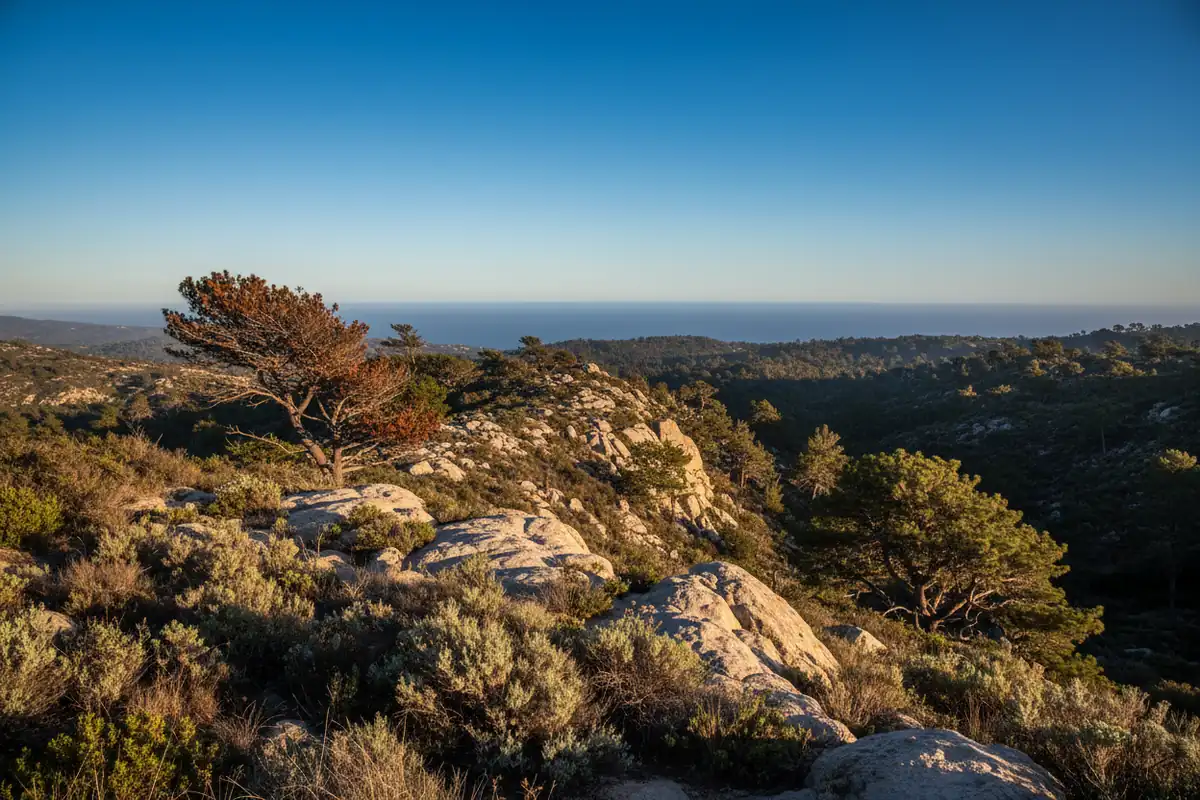
California hills and woodland ridges
Dry San Diego County chaparral and sandstone hills where wildfires frequently threaten communities.
Immediate state-specific answer

For San Diego County wildfire families: California fire liability, the two- and three-year filing periods, public-entity claim rules, wrongful death and insurer duties.

On this page
  1. Who Can Be Held Responsible When a Fire Spreads to Your Property
  2. How Long the Law Allows for Home, Belongings and Tree Losses
  3. Deadlines When Someone Was Hurt or Killed in the Fire
  4. Why a Public Agency's Involvement Shortens the Timeline
  5. What Happens When More Than One Party May Be at Fault
  6. When a Wildfire Causes a Death: Who May Bring a Claim
  7. What Your Insurer Owes After a San Diego Wildfire
  8. Records That Often Matter in Wildfire Cases
  9. Frequently asked questions
  10. Sources

State legal snapshot

California

Primary legal sources for California

California law decides wildfire claims in San Diego County. Under California's fire statute, a person who sets a fire, or lets one escape, to someone else's property, whether willfully, negligently or in violation of law, is liable to the owner for the fire's damage. California generally allows three years to sue for injury to real property and two years for personal injury or death.

Most people facing this after a San Diego County fire are standing in front of a burned lot or a damaged house, or sitting with a family that has lost someone. They are fielding calls from an insurer and trying to understand who, if anyone, is responsible under the law. This page walks through California's rules as the statutes themselves state them: who may be liable, how long the law allows, what changes if a public agency is involved, and what the insurance statutes require. For a wider overview, see our page on the California wildfire lawyer topic.

Who Can Be Held Responsible When a Fire Spreads to Your Property

California has a statute written specifically for fires that spread. Health and Safety Code section 13007 provides:

"Any person who personally or through another wilfully, negligently, or in violation of law, sets fire to, allows fire to be set to, or allows a fire kindled or attended by him to escape to, the property of another, whether privately or publicly owned, is liable to the owner of such property for any damages to the property caused by the fire."

The statute reaches more than the person who struck a match. It also covers someone who acts "through another," someone who "allows fire to be set," and someone who lets a fire they kindled or attended escape. It applies to property that is privately or publicly owned, and it runs to the owner for damage the fire caused.

Alongside it sits California's general rule of negligence, meaning a failure to use reasonable care. Civil Code section 1714, subdivision (a), says everyone is responsible "for an injury occasioned to another by his or her want of ordinary care or skill in the management of his or her property or person," except where the injured person brought the injury on themselves willfully or by their own want of ordinary care.

If your home burned, it helps to see the claim as two questions. The first is what started the fire and how it spread, which evidence answers. The second is whether those facts show willful conduct, negligence or a violation of law, which is the legal question. A fire, however destructive, does not by itself prove anyone's fault, so the strength of a claim rests on what the records show about the cause. Families in this position often ask what is known about the fire's origin and who controlled the land or equipment involved, and a conversation with an attorney can help sort the factual record from the legal test.

How Long the Law Allows for Home, Belongings and Tree Losses

California treats different kinds of loss under different rules, and a family that lost a home often has more than one kind. Code of Civil Procedure section 338 sets a three-year period for several actions, including:

  • an action upon a liability created by statute, other than a penalty or forfeiture;
  • an action for trespass upon or injury to real property;
  • an action for taking, detaining, or injuring goods or chattels, including an action for the specific recovery of personal property.

A statute of limitations is the period the law allows for filing a lawsuit. Real property means land and what is built on it, such as the house, garage and fencing. "Goods or chattels" means belongings, such as furniture, vehicles and tools. When the period begins can depend on the facts and on California's current law at the official page linked above.

Trees have their own damages rule. Civil Code section 3346, subdivision (a), says that for wrongful injuries to timber, trees or underwood on the land of another, "the measure of damages is three times such sum as would compensate for the actual detriment." The statute gives exceptions, including where the trespass was "casual or involuntary" or where the defendant had probable cause to believe the land was their own.

For a San Diego County homeowner with mature oaks, orchard trees or landscaping lost to fire, tree loss may be measured differently from damage to the house. Owners in this position often sort their losses into the house and land, belongings, and trees, since each category may follow its own rule. Whether either rule applies depends on the facts. Our page on deadlines for wildfire claims collects these periods in one place.

Deadlines When Someone Was Hurt or Killed in the Fire

If you were hurt in a San Diego wildfire, or a family member died, a different clock applies than the one for the house. Code of Civil Procedure section 335.1 provides two years for "an action for assault, battery, or injury to, or for the death of, an individual caused by the wrongful act or neglect of another."

Some injuries rest on exposure rather than on a burn or a fall. Code of Civil Procedure section 340.8, subdivision (a), covers a civil action "for injury or illness based upon exposure to a hazardous material or toxic substance." The action must be filed no later than either two years from the date of injury, or two years after the plaintiff becomes aware of, or reasonably should have become aware of, an injury, the physical cause of the injury, and sufficient facts to put a reasonable person on inquiry notice that the injury was caused by someone's wrongful act. Subdivision (b) gives a parallel later-of-two-dates rule for an action for a death based on such exposure. Whether something counts as a hazardous material or toxic substance is a question the facts and the law decide.

Children are treated differently. Under Code of Civil Procedure section 352, subdivision (a), if a person entitled to sue was under the age of majority, or lacked the legal capacity to make decisions, when the cause of action accrued, "the time of the disability is not part of the time limited for the commencement of the action." Subdivision (b) does not apply this to an action against a public entity or public employee on a cause of action for which a claim must be presented.

The stakes are concrete: when a period runs out, the right to sue on that claim can be lost. Which period applies, and when it began, often turns on details that differ from one family to the next. People in this position often note the date of the injury, the date symptoms appeared or were diagnosed, and the age of each injured family member, since those dates frame the questions an attorney would review.


Why a Public Agency's Involvement Shortens the Timeline

California adds a step when the party that may be responsible is a public entity, such as a government agency. Government Code section 945.4 says that, except as provided in sections 946.4 and 946.6, no suit for money or damages may be brought against a public entity on a cause of action that requires a claim "until a written claim therefor has been presented to the public entity and has been acted upon by the board, or has been deemed to have been rejected by the board."

That written claim has its own deadline. Under Government Code section 911.2, subdivision (a), a claim relating to a cause of action for death, for injury to person or to personal property, or for growing crops must be presented "not later than six months after the accrual of the cause of action." A claim relating to any other cause of action must be presented not later than one year after accrual.

After the claim stage, Government Code section 945.6, subdivision (a), sets the time within which a suit against the public entity must be commenced, except as provided in sections 946.4 and 946.6 and subject to subdivision (b). Its time periods are set out at the official page.

These rules run separately from, and on shorter timelines than, the two- and three-year periods above, and the minority rule in section 352 does not stretch them. For a family, this means a lawsuit against an agency generally cannot go forward without the written claim step first, and waiting on the longer periods could leave that claim behind. Nothing on this page suggests that any public entity in San Diego County is responsible for any fire. When a family is unsure whether an agency managed the land, equipment or lines involved, that uncertainty is itself an early question to raise with an attorney.

What Happens When More Than One Party May Be at Fault

Responsibility for a wildfire's harm is not always a question with one name for an answer. If you are wondering whether a share of blame could be assigned to you, or divided among several others, California answers through case law. In Li v. Yellow Cab Co. (1975) 13 Cal.3d 804, the Supreme Court of California superseded the all-or-nothing rule of contributory negligence with a system of pure comparative negligence, which assigns liability in direct proportion to the amount of negligence of each of the parties.

A statute adds a rule about one category of damages. Civil Code section 1431.2, subdivision (a), provides that "in any action for personal injury, property damage, or wrongful death, based upon principles of comparative fault, the liability of each defendant for non-economic damages shall be several only and shall not be joint." Non-economic damages are losses without a receipt, such as pain and suffering. "Several only" means each defendant answers for its own share, in direct proportion to its percentage of fault, rather than for the whole.

For a San Diego family, fault may be divided among more than one party, and how it is divided can affect what each one answers for. This page makes no prediction about any fire. Families often list who owned, maintained or operated anything near where the fire started, because who the possible parties are, and what each controlled, shapes how an attorney would look at the claim.

When a Wildfire Causes a Death: Who May Bring a Claim

A wrongful-death claim is a lawsuit brought by certain family members when a death was caused by another's wrongful act or neglect. Code of Civil Procedure section 377.60 says the cause of action "may be asserted by any of the following persons or by the decedent's personal representative on their behalf." Subdivision (a) lists the decedent's surviving spouse, domestic partner, children, and issue of deceased children, or, if there is no surviving issue, the persons, including the surviving spouse or domestic partner, who would be entitled to the property of the decedent.

The two-year period in section 335.1, described above, covers an action for the death of an individual caused by the wrongful act or neglect of another.

If you lost someone, the law asks first whether you have standing, meaning the legal right to bring the claim, and only then whether the claim succeeds. Parents, siblings or grandchildren may have loved the person deeply, yet their place under the statute depends on who else survives and on the family's particular relationships. That fact-specific question sits beside the harder one of what caused the death.

When a family in San Diego is working through who may bring a claim and which deadline applies, a conversation with our attorney can cover the family relationships, the dates and the official records involved; you may request a case evaluation to discuss it.

What Your Insurer Owes After a San Diego Wildfire

Insurance often moves faster than any lawsuit, and California's Insurance Code sets rules for it. Insurance Code section 2051.5, subdivision (a)(1), says that under an open policy requiring payment of replacement cost, "the measure of indemnity is the amount that it would cost the insured to repair, rebuild, or replace the thing lost or injured, without a deduction for physical depreciation, or the policy limit, whichever is less." The section's other subdivisions, at its official page, include further rules for losses after a state of emergency, including timing rules.

Living expenses have their own statute. Under Insurance Code section 2060, subdivision (a), when an insured makes a claim for additional living expenses after a loss under a homeowners' policy, "the insurer shall provide the insured with a list of items that the insurer believes may be covered under the policy as additional living expenses." The list may say it covers only commonly claimed items, if that is the case. The section's further subdivisions address how long these expenses are covered.

For a San Diego County family living away from home, these provisions set duties that a policy's own language may not spell out. Policyholders in this position often compare an insurer's offer against the replacement-cost measure and check whether the living-expense list has arrived after a claim. What any policy pays depends on its terms and the facts. Our wildfire claim services page discusses replacement-cost timing further.

Records That Often Matter in Wildfire Cases

Records are the facts a claim rests on, and after a fire many of them are scattered. If you were affected by a San Diego wildfire, the records that often matter include:

  • fire incident information and records from CAL FIRE, the state's fire agency;
  • emergency alerts and evacuation notices issued through AlertSanDiego, San Diego County's emergency alert system;
  • property records, such as deeds, permits and earlier photos of the home and land;
  • photographs and video of the property before and after the fire;
  • insurance policies and correspondence with the insurer;
  • lists and receipts documenting personal belongings that were lost;
  • medical records, where someone was injured.

Each kind of record connects to a different part of the law above: incident records to the liability question, property records to section 338, tree photos to section 3346, insurance letters to sections 2051.5 and 2060, and medical records to section 335.1. What is at stake is proof: without these records, the facts the statutes ask about can be hard to show. Families often gather them over weeks rather than days, sometimes while living somewhere else.

Free case evaluation

No Fee Unless We Win Your Case

A free case evaluation is how it starts. Tell us what happened, and we’ll help you understand your options. You pay no fee unless we win your case.

California Wildfire Litigation Group

How it works

  1. Call us or request a free case evaluationTell us what happened, in your own words.
  2. Talk through your caseYour options, and what your case may be worth.
  3. No fee unless we winYou pay no attorney fee unless we win your case.
Free case evaluation

Tell Us What Happened

Frequently asked questions

Where can I find current information about active wildfires near San Diego?

CAL FIRE's official site at fire.ca.gov publishes statewide fire incident information. San Diego County issues emergency alerts through alertsandiego.org. Both are official public sources.

How long do I have to file a wildfire property damage claim in California?

Code of Civil Procedure section 338 provides three years for an action for trespass upon or injury to real property, and for injuring goods or chattels. When the period begins can depend on the facts. A claim against a public entity follows shorter claim-presentation rules.

Does California law hold someone responsible if their fire spreads to my property?

Health and Safety Code section 13007 makes a person who willfully, negligently or in violation of law sets a fire, or allows one to escape, to another's property liable to the owner for the fire's damage. Whether it applies depends on the facts.

What if a public agency may have contributed to the wildfire — does that change the process?

Yes. Government Code section 945.4 bars suit until a written claim has been presented and acted upon or deemed rejected. Section 911.2(a) requires a claim for death or injury to person or personal property within six months after accrual, and other claims within one year.

Who can bring a wrongful death claim after a wildfire in California?

Code of Civil Procedure section 377.60(a) lists the surviving spouse, domestic partner, children and issue of deceased children, or, if there is no surviving issue, those entitled to the decedent's property. A personal representative may assert it on their behalf. Standing depends on the family's facts.

What does California law say about insurance replacement cost after a wildfire?

Insurance Code section 2051.5 measures replacement cost as what it would cost to repair, rebuild or replace, without deduction for physical depreciation, or the policy limit, whichever is less. Section 2060 requires the insurer to give a list of items that may be covered as additional living expenses.

Can my own fault in a wildfire reduce what I can recover?

California uses pure comparative negligence under Li v. Yellow Cab Co. (1975) 13 Cal.3d 804, which assigns liability in direct proportion to each party's negligence. Civil Code section 1431.2(a) makes each defendant's liability for non-economic damages several only, not joint.

Are there special rules for wildfire claims involving toxic smoke or ash exposure?

Code of Civil Procedure section 340.8 covers injury or illness based on exposure to a hazardous material or toxic substance: the later of two years from injury, or two years after awareness of the injury, its physical cause and facts suggesting wrongful cause. Whether a substance qualifies depends on the facts.

Primary legal sources

Statutes, regulations and court sources

  1. 01California Health and Safety Code section 13007 · California Legislative Information
  2. 02California Civil Code section 1714 · California Legislative Information
  3. 03California Code of Civil Procedure section 338 · California Legislative Information
  4. 04California Civil Code section 3346 · California Legislative Information
  5. 05California Code of Civil Procedure section 335.1 · California Legislative Information
  6. 06California Code of Civil Procedure section 340.8 · California Legislative Information
  7. 07California Code of Civil Procedure section 352 · California Legislative Information
  8. 08California Government Code section 945.4 · California Legislative Information
  9. 09California Government Code section 911.2 · California Legislative Information
  10. 10California Government Code section 945.6 · California Legislative Information
  11. 11California Civil Code section 1431.2 · California Legislative Information
  12. 12California Code of Civil Procedure section 377.60 · California Legislative Information
  13. 13California Insurance Code section 2051.5 · California Legislative Information
  14. 14California Insurance Code section 2060 · California Legislative Information

Other sources

  1. 15CAL FIRE · fire.ca.gov
  2. 16AlertSanDiego · alertsandiego.org
CallTextFree Case Evaluation