Skip to content

The resource library

How a California Wildfire Claim Works, Step by Step

Updated November 11, 2026

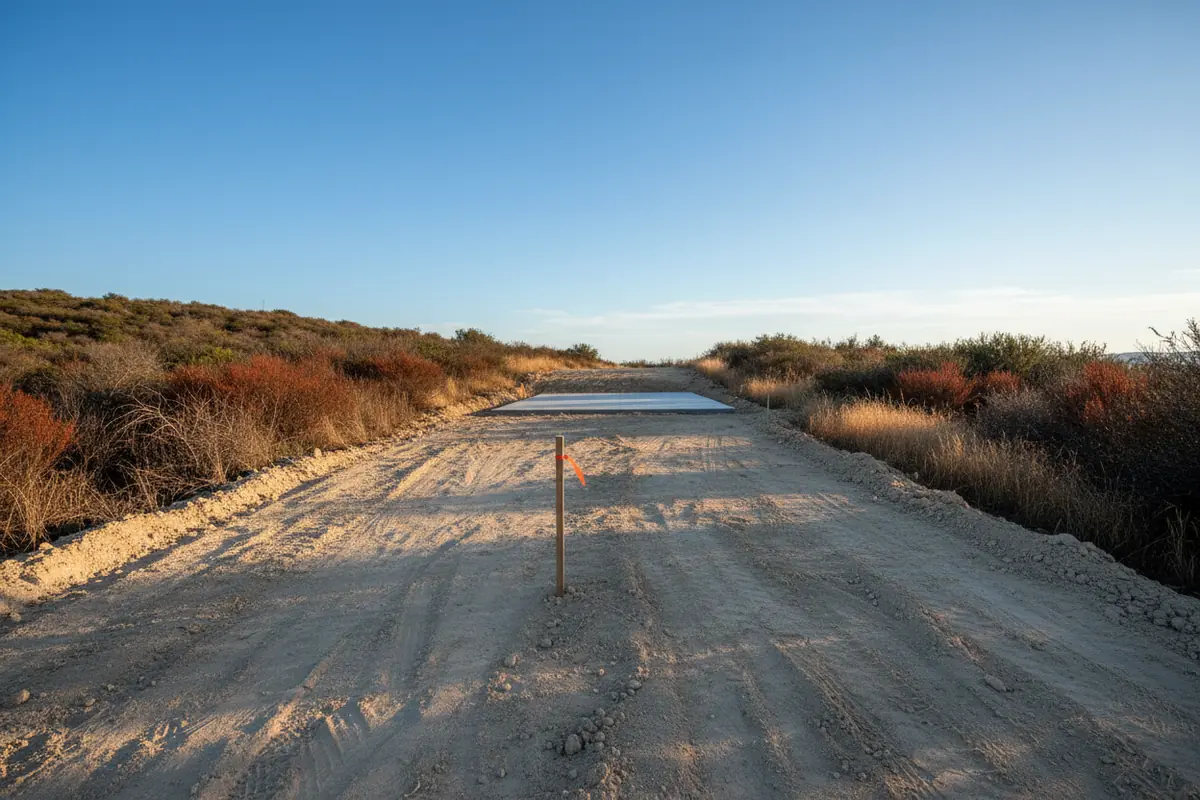
A graded dirt lot between dry hillsides, a survey stake marking the next step.
Short answer

The six stages of a California wildfire claim, with the 100-day proof-of-loss floor, the 36-month replacement-cost window and the three-year property rule.

On this page
  1. Where You Are in the Claim Process After a California Wildfire
  2. What This Guide Covers and Why It Matters to Your Family
  3. Step 1 — Safety, Documentation, and Urgent Needs
  4. Step 2 — What the Proof-of-Loss Deadline Means for Your Insurance Claim
  5. Why the Insurer's Timeline and Your Replacement-Cost Window Are Not the Same Thing
  6. Step 3 — Can You Receive Federal Disaster Aid Alongside Insurance?
  7. Step 4 — Was Someone Else Responsible for the Fire That Damaged Your Home?
  8. What Investigators and Attorneys Look at Before a Demand Is Made
  9. Step 5 — What a Demand and Lawsuit Involve for Your Family
  10. Step 6 — What a Settlement or Trial Means for a Wildfire Claim
  11. Filing Deadlines Under California Law
  12. How This Guide Was Built and What It Cannot Tell You
  13. Frequently asked questions
  14. Sources

A California wildfire claim usually moves through six stages: safety and urgent needs, the insurance claim, federal disaster aid, finding out who may be responsible, a demand or lawsuit, and settlement or trial. The stages often overlap. Each one has its own rules, and some carry deadlines set by California or federal law.

If your home burned, someone in your family was hurt or a loved one died in a California fire, you may be living somewhere temporary, juggling an adjuster's calls, and trying to read forms that assume you already know the system. Most people facing this process have never filed a fire claim before, and the hardest part is not knowing what comes next. This guide walks through each stage in order, explaining what the law says at each point and what it can mean for a family in that position.

Where You Are in the Claim Process After a California Wildfire

In practice, the six stages overlap. A family may still be gathering photos while the insurance claim is open, or may apply for aid while the insurer is reviewing the loss. The order can also shift depending on the fire, the insurer and whether an official investigation is underway.

The sequence matters because each stage builds on the one before it. Records gathered early support the insurance claim. Insurance payments affect what federal aid can cover. What an investigation finds shapes whether a claim against another party exists at all. This page describes how the process generally works in California. It is not an opinion on any one family's loss.

If you are trying to place yourself on this path, a useful first question is which stages are already open for your household and which have not started yet. At stake is simple: a step skipped early can narrow what is available later.

What This Guide Covers and Why It Matters to Your Family

This resource lays out the path a California wildfire claim usually follows, so a survivor or a family can see where they are and what typically comes next. It draws on the California and federal statutes linked on this page, which set proof-of-loss timing, the replacement-cost window, federal individual assistance and the duplication-of-benefits rule, and the three-year period for injury to real property.

Many families already hold some of the records this process draws on, even if they have not yet organized them: insurance policy documents, photos taken before or after the fire, receipts or online order history, medical records if someone was hurt, letters from an insurer, and notices from CAL FIRE or a local fire agency. Knowing which of these exist, and where they are, is often a practical place to begin.

The guide cannot say whether a particular person has a claim, who caused a particular fire, or how a particular deadline applies to one household. What is at stake is understanding which rules may already be running for you, so those questions can be raised while options remain open.

Step 1 — Safety, Documentation, and Urgent Needs

The first stage is about getting through the emergency itself: following evacuation orders, finding shelter, getting medical care where someone was hurt, and returning to the property only once officials allow access.

As things settle, families often begin collecting records. If you were hurt or lost property, the records that usually matter include:

  • Photos and video of the damage, along with any pictures of the home or belongings taken before the fire.
  • Medical records and bills, if anyone was injured.
  • Receipts, bank statements or online purchase history for property that was destroyed.
  • Incident and fire reports from CAL FIRE or a local fire agency.
  • Names and contact details of neighbors or others who saw how the fire spread.

Injury records matter here as a category of documentation. What care someone needs is a medical question, not a legal one.

People in the middle of a loss rarely think of themselves as building a file. But the insurer, any aid program and any later claim against another party will all rely on what exists from these first days. At stake is the foundation every later stage depends on.

Step 2 — What the Proof-of-Loss Deadline Means for Your Insurance Claim

Proof of loss is the formal statement a policyholder gives the insurer describing what was damaged or destroyed and its value. For a loss relating to a state of emergency, as defined in section 8558 of the Government Code, California Insurance Code section 2051.5 provides that an insurer shall not require the insured to provide proof of loss less than 100 days after the loss, and the statute also provides for additional extensions for good cause.

The same section governs replacement-cost policies. Replacement cost is what it would cost to repair, rebuild or replace the property without a deduction for physical depreciation, or the policy limit, whichever is less. If the policy requires rebuilding or replacing before full replacement cost is paid, the insurer pays the actual cash value first. Once the property is repaired, rebuilt or replaced, the insurer pays the difference between that payment and the full replacement cost reasonably paid, up to the policy limits.

California Insurance Code section 2071 adopts the standard form of fire insurance policy for California. That form insures against loss by fire, lightning and removal from premises endangered by those perils. It covers the actual cash value at the time of loss, but not more than it would cost to repair or replace the property with material of like kind and quality within a reasonable time. The form's provisions and stipulations become part of the policy, alongside any added endorsements. Those terms govern the rest of the claim, including any time limit for bringing a suit against the insurer.

For a policyholder, this means the policy documents themselves carry rules that matter as much as the adjuster's requests. Families at this stage often weigh whether their policy is a replacement-cost policy and whether the loss relates to a declared state of emergency, since both affect which timing rules apply. The California Department of Insurance publishes wildfire resources for policyholders, and our page on wildfire insurance claim disputes covers what happens when a claim stalls.

At stake is how much the insurer pays, and when it pays it.

Why the Insurer's Timeline and Your Replacement-Cost Window Are Not the Same Thing

When an adjuster sets dates for documents or inspections, many policyholders assume those dates are the only clock running. Section 2051.5 creates a separate one.

For an ordinary loss, an insurer may not set a time limit of less than 12 months from the date of the first actual-cash-value payment for the insured to collect the full replacement cost, subject to the policy limit. For a loss relating to a state of emergency, that floor is 36 months from the date of the first actual-cash-value payment, again subject to the policy limit. The statute does not prevent an insurer from allowing more time.

The statute also provides for extensions. An insurer shall provide one or more additional six-month extensions for good cause if the insured, acting in good faith and with reasonable diligence, runs into delays in approval for, or reconstruction of, the home that are beyond the insured's control. The statute lists examples, including unavoidable permit delays, a lack of necessary construction materials and the unavailability of contractors.

Policyholders sometimes find that a payment or a signed document is described as resolving the claim while the replacement-cost window is still open. What a given release or payment covers depends on its exact words. At that decision point, a conversation with our attorney can cover how the window applies under a particular policy and what a proposed document says.

At stake is the difference between actual cash value and full replacement cost.

Step 3 — Can You Receive Federal Disaster Aid Alongside Insurance?

Under 42 U.S.C. § 5174, subsection (a), the President, in consultation with the Governor of a State, may provide financial assistance and, if necessary, direct services to individuals and households who, as a direct result of a major disaster, have necessary expenses and serious needs they cannot meet through other means. This aid depends on a presidential major-disaster declaration covering the affected area. The program is administered by the Federal Emergency Management Agency (FEMA).

The same subsection provides that a household is not denied certain categories of this assistance solely because it has not applied for or received a loan or other financial help from the Small Business Administration or another federal agency.

The duplication of benefits rule limits overlap between aid and insurance. Under 42 U.S.C. § 5155, subsection (a), no person may receive federal disaster assistance for any part of a loss for which they have already received financial assistance under any other program, or from insurance or any other source. This is why the timing and amount of an insurance payment can affect what aid covers.

For a household, the practical questions are whether a declaration covers the area and which needs insurance is not meeting. Keeping insurance payment records alongside aid paperwork can make that overlap easier to track. Our page on claims after a recent wildfire discusses how these pieces fit together.

At stake is aid for needs that insurance does not meet.

Step 4 — Was Someone Else Responsible for the Fire That Damaged Your Home?

The question families eventually ask is why the fire started and whether anyone is answerable for it. Many claims of this kind rest on negligence, which means a failure to use reasonable care. For a family, that comes down to four questions about the fire that reached their property: did a party owe a duty of care, did it fail to meet that duty, did that failure cause the fire or the harm, and what loss resulted. The answers depend on the facts of the specific fire and the specific loss.

Depending on the origin and cause of a fire, the parties examined in California wildfire matters can include electric utilities, landowners and equipment manufacturers, and sometimes a public entity. Naming a category says nothing about whether any party in it is responsible for a given fire. Our page on the utility wildfire lawsuit covers claims involving utilities and public entities.

Time limits differ by the kind of claim. California Code of Civil Procedure section 338 sets three years for several kinds of actions, including:

  • An action for trespass upon or injury to real property.
  • An action upon a liability created by statute, other than a penalty or forfeiture.
  • An action for taking, detaining or injuring goods or chattels, meaning personal belongings.

When a period begins and whether anything pauses it depend on the claim and its facts.

For someone in this position, the theory and the deadline are linked: whether a home, belongings or both were harmed can determine which period applies. Families at this stage often weigh what they know about where the fire started and which kinds of loss they have documented. At stake is which legal theory applies and which deadline governs, and so whether a claim against another party remains available.

What Investigators and Attorneys Look at Before a Demand Is Made

Families waiting for answers often hear that an investigation is underway without knowing what it will produce. Records that typically bear on a wildfire claim include:

  • CAL FIRE origin-and-cause investigation reports. These are official records describing where and how investigators concluded a fire began. A report is not a court's finding of fault.
  • Utility inspection and maintenance records, in fires where utility equipment is examined.
  • Equipment maintenance logs and vegetation-management records.
  • Weather data, photos and video, and witness accounts.
  • The household's own records from Step 1.

Some of these records are held by agencies or companies rather than families, and obtaining them can take formal steps. For a family, this means the photos, receipts and witness names gathered early are the part of the record they control directly. How complete the record is shapes whether a demand can lead to a negotiated resolution or whether the claim moves into litigation.

If you are trying to understand where an investigation stands and how its records relate to your loss, you can request a conversation with our attorney about the investigation timeline and the records involved.

At stake is the evidence a claim is built on.

Step 5 — What a Demand and Lawsuit Involve for Your Family

A demand is a written statement to a responsible party or its insurer that describes the loss and asks for payment. If the demand does not resolve the claim, the next step can be a civil lawsuit in a California superior court.

Section 338 sets the outer boundary for many property claims. Its three-year period for injury to real property applies as the statute states it, and a lawsuit filed after the applicable period expires is generally barred. Our page on wildfire claim deadlines collects the periods in one place.

For a family, a lawsuit usually unfolds in a sequence: a complaint starts the case, the defendant files an answer, both sides exchange documents and testimony in discovery, the court rules on issues raised by motions, and the case ends in settlement or trial. Each phase can draw on the records gathered in earlier stages, and families often ask how much involvement each phase will require of them.

Where someone died, a family may consider a wrongful death claim, which is a claim brought by certain family members for a death caused by another's wrongful act or neglect. The damages the law may allow fall into categories such as harm to real property, harm to personal property, personal injury and wrongful death. What is available depends on the facts and the law that applies to them. The wildfire lawsuit attorney page covers the lawsuit stage in more depth.

At stake is whether a claim can be heard at all.

Step 6 — What a Settlement or Trial Means for a Wildfire Claim

A settlement is a negotiated agreement that ends a claim without a verdict. A trial is the alternative, in which a judge or jury decides the disputed issues. Many civil claims resolve by settlement, but no outcome is assured either way.

A settlement usually comes with a release. A release is a final document, and what it gives up depends entirely on its terms: which parties it covers, which losses it covers, and whether it reaches claims for property damage, personal injury or wrongful death. Families weighing an offer often compare its terms with the losses documented in earlier stages, including any replacement-cost amounts still open under the insurance policy.

Reading an offer is where earlier records tend to matter most. A conversation with our attorney can cover what a proposed release reaches and how its terms line up with the documented losses.

At stake is finality: what a signed release ends cannot usually be reopened.

Filing Deadlines Under California Law

Deadlines are the part of this process families worry about most, and each one runs from a different event:

  • Proof of loss. For a loss relating to a state of emergency, section 2051.5 bars an insurer from requiring proof of loss less than 100 days after the loss.
  • Replacement cost. Section 2051.5 sets a floor of at least 12 months, or 36 months for a state-of-emergency loss, measured from the date of the first actual-cash-value payment. Both are subject to the policy limit, with six-month extensions for good cause as the statute describes.
  • The policy itself. Under section 2071, the standard fire policy's provisions and stipulations, including any limit on suing the insurer, are part of the contract.
  • Claims against another party. Section 338 sets three years for injury to real property, for injury to goods or chattels, and for a liability created by statute.

Which period applies depends on the specific policy, the fire, any emergency or disaster declaration, and the kind of claim. Families often find it helpful to note the date of the loss and the date of the first actual-cash-value payment, since those events start different periods. For older fires, our page on claims for a past wildfire covers the time limits that still apply.

How This Guide Was Built and What It Cannot Tell You

This guide draws on five sources, each used only for what its text states. California Insurance Code sections 2051.5 and 2071 supply the proof-of-loss, replacement-cost and standard fire policy rules in Step 2. 42 U.S.C. § 5174(a) and 42 U.S.C. § 5155(a) supply the federal aid and duplication-of-benefits rules in Step 3. California Code of Civil Procedure section 338 supplies the three-year periods in Steps 4 and 5. The stages follow the order in which these rules usually come into play: insurance first, aid alongside it, and claims against others afterward.

If your household is in Step 2, for example, the rules that matter most are the proof-of-loss floor and the replacement-cost window, and Step 4's rules may not matter yet. A deadline shown here is a rule, not a count: the date that starts each period, such as the loss, the first actual-cash-value payment or the injury to property, comes from the household's own records. Families commonly work on two or three stages at once.

This guide does not determine fault or liability, say whether anyone has a claim, calculate any deadline or say whether a period has passed, or value a loss. Federal aid depends on a declaration and on program rules that go beyond the statutes cited here, and a specific policy may contain terms more generous than the statutory floors, as section 2051.5 itself allows. What is at stake is the gap between a general rule and one family's facts, which is the question a conversation with an attorney can help sort out.

Free case evaluation

No Fee Unless We Win Your Case

A free case evaluation is how it starts. Tell us what happened, and we’ll help you understand your options. You pay no fee unless we win your case.

California Wildfire Litigation Group

How it works

  1. Call us or request a free case evaluationTell us what happened, in your own words.
  2. Talk through your caseYour options, and what your case may be worth.
  3. No fee unless we winYou pay no attorney fee unless we win your case.
Free case evaluation

Tell Us What Happened

Frequently asked questions

How does a California wildfire claim start?

It usually starts on two tracks at once: notifying the insurer and preparing a proof of loss under the policy, and, where a presidential major-disaster declaration covers the area, applying for federal assistance under 42 U.S.C. § 5174(a). The two tracks have different rules, and insurance payments affect what aid can cover.

Can a wildfire victim receive both insurance and federal disaster aid?

Yes, but not for the same part of a loss. Under 42 U.S.C. § 5155(a), no one may receive federal disaster assistance for any part of a loss already paid by insurance or another source. Aid can address needs that insurance does not meet, depending on the loss and the coverage.

How long does a California wildfire lawsuit take?

No single timeline applies. The length of a case depends on the complexity of the fire, the number of parties, the volume of evidence, and whether the claim settles or goes to trial. The stages are the complaint, the answer, discovery, motions, and then resolution by settlement or trial.

Who may be responsible for a California wildfire?

That depends on what caused the fire. Parties examined in California wildfire matters can include electric utilities, landowners, equipment manufacturers and public entities. Whether any party is liable turns on duty, breach, causation and damages, applied to the facts of that fire.

What is the statute of limitations for a California wildfire property damage claim?

California Code of Civil Procedure section 338 sets three years for an action for trespass upon or injury to real property. The same section sets three years for injury to goods or chattels and for a liability created by statute. When a period begins depends on the claim and its facts.

What does proof of loss mean in a California wildfire insurance claim?

Proof of loss is a formal statement to the insurer describing what was damaged or destroyed and its value. For a loss relating to a state of emergency, Insurance Code section 2051.5 bars an insurer from requiring it less than 100 days after the loss.

What federal aid is available after a California wildfire?

After a presidential major-disaster declaration, 42 U.S.C. § 5174(a) authorizes financial assistance and, if necessary, direct services for necessary expenses and serious needs that individuals and households cannot meet through other means. Under 42 U.S.C. § 5155(a), the aid cannot duplicate a payment already received from insurance or another source.

Sources

  1. 01California Insurance Code section 2051.5 · California Legislative Information
  2. 02California Insurance Code section 2071 · California Legislative Information
  3. 0342 U.S.C. § 5174 · GovInfo (U.S. Government Publishing Office)
  4. 0442 U.S.C. § 5155 · GovInfo (U.S. Government Publishing Office)
  5. 05California Code of Civil Procedure section 338 · California Legislative Information
CallTextFree Case Evaluation