Skip to content

California wildfire information

Equipment Owner Liability for California Wildfires

Updated November 10, 2026

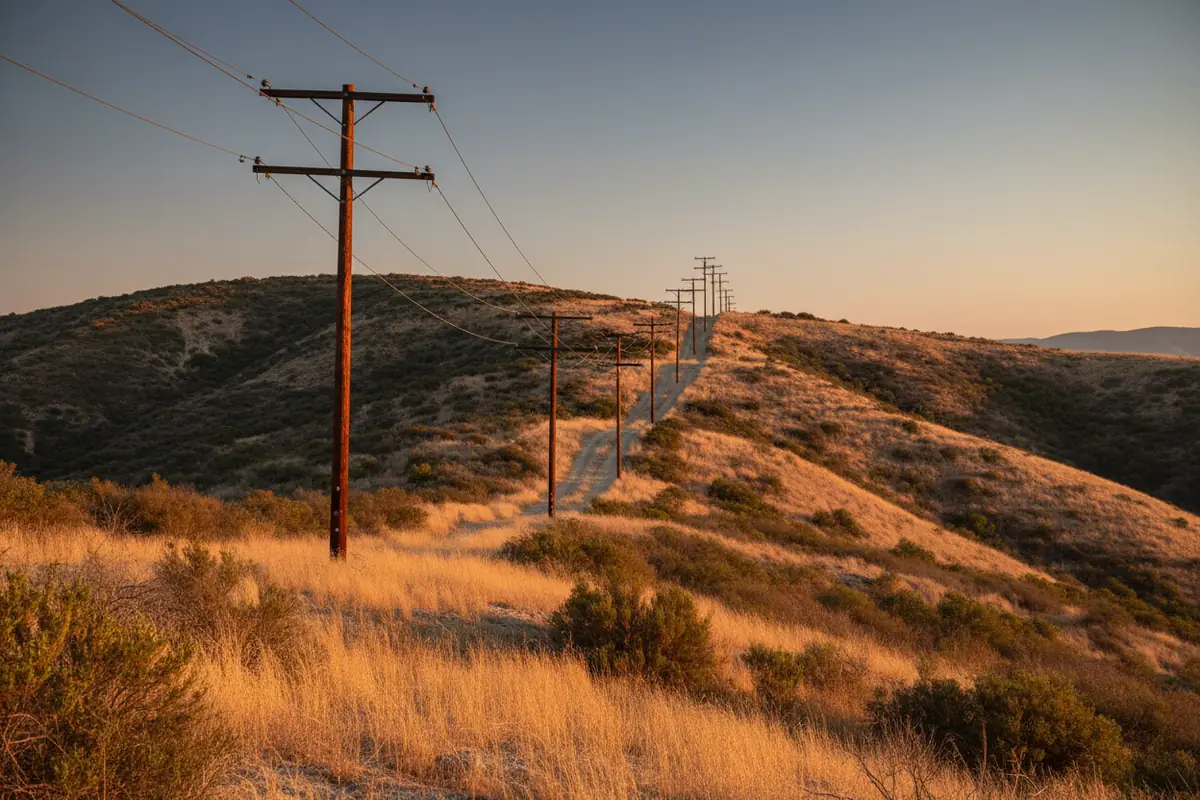
Wooden power poles crossing dry California hillside grass in late afternoon light.
Immediate answer

How California's Health and Safety Code sections 13007, 13008 and 13009 and Civil Code 1714(a) apply to owners of equipment that sparks a wildfire, and which records matter.

On this page
  1. When a Fire Started at Someone Else's Equipment: The Rules That Apply
  2. What You Would Have to Show About the Equipment Owner
  3. If a Mower, Tractor, Truck or Power Line Seems to Be Where It Began
  4. Why the Weather and Conditions That Day Matter to Your Claim
  5. If Agencies Seek the Cost of Fighting the Fire: Health and Safety Code § 13009
  6. Records That Can Help Show What Happened to Your Property
  7. Frequently asked questions
  8. Sources

If equipment on someone else's land started the fire that reached your home, California law can hold the person who owned or ran that equipment responsible, but only when the facts meet what the statutes ask. A person who sets a fire, or lets one escape, wilfully, negligently or in violation of law can owe the property owner for the damage. Whether it happened that way turns on proof.

Most people facing this question are standing in the aftermath of a wildfire: a burned house or barn, a family member hurt, perhaps a death, and a growing sense that a mower, a tractor, a power line or a parked truck was where it began. Neighbors talk, rumors spread, and nobody seems able to say plainly whether the owner of that machine answers for what followed. This page explains how California law approaches that question, what a claim has to show, and which records tend to shape the answer.

When a Fire Started at Someone Else's Equipment: The Rules That Apply

California answers this question through a few short statutes and one broad duty. In this page, an equipment owner means the person or business that owns or operates lines, machinery, vehicles or tools whose use or condition is said to have started or spread a fire.

If your property was damaged, the first rule to know is section 13007 of the California Health and Safety Code. In plain terms, it makes a person who sets a fire, allows one to be set, or lets a fire they kindled or attended escape onto another's property answerable to that owner for the damage, if they acted wilfully, negligently or in violation of law. Its exact words are that "any person who personally or through another wilfully, negligently, or in violation of law, sets fire to, allows fire to be set to, or allows a fire kindled or attended by him to escape to, the property of another, whether privately or publicly owned, is liable to the owner of such property for any damages to the property caused by the fire." For a family, the words "personally or through another" matter: the statute reaches fires set through an employee or someone else acting for the person, not only fires a person sets by hand.

If the fire began on the equipment owner's own land, section 13008 of the California Health and Safety Code may be the closer fit. It applies to "any person who allows any fire burning upon his property to escape to the property of another... without exercising due diligence to control such fire." Due diligence here means the reasonable effort a person makes to keep a fire on their land under control.

If someone was hurt, the general duty of care in section 1714(a) of the California Civil Code comes into play: "Everyone is responsible, not only for the result of his or her willful acts, but also for an injury occasioned to another by his or her want of ordinary care or skill in the management of his or her property or person." The fire statutes speak to damage to property; section 1714(a) is the broader rule that also reaches injuries to people.

These rules apply to private owners of equipment, not only to large companies. Power companies carry their own regulatory layer, explained on the page about a utility wildfire lawsuit. Whether any of these rules fits a particular fire depends entirely on what happened.

What You Would Have to Show About the Equipment Owner

A statute that says someone "is liable" still requires proof of each piece it names. For a family trying to understand whether the owner of a machine answers for their loss, those pieces are the real questions.

Under section 13007, the questions follow the statute's words. Did the person, personally or through another, set the fire, allow it to be set, or allow a fire they kindled or attended to escape? Did they act wilfully, negligently or in violation of law? Did the fire reach someone else's property, and did it cause damage there?

Under section 13008, the questions are different. Was the fire burning on the person's own property? Did it escape to another's property? Did the person fail to exercise due diligence to control it? And did damage result?

Under Civil Code section 1714(a), the questions take the familiar shape of negligence, which simply means a failure to use ordinary care. A claim built on it generally asks four things: a duty, meaning the obligation to act with ordinary care; a breach, meaning that care was not used; causation, meaning the lack of care actually led to the harm; and damages, meaning a real loss such as a damaged home or an injury. A fuller walk-through appears on the page explaining what a wildfire claim must show.

Responsibility is not always one person's alone. Section 1714(a) itself contains an exception "so far as the latter has, willfully or by want of ordinary care, brought the injury upon himself or herself." California applies a rule called pure comparative fault, under which responsibility can be divided among more than one party, and an injured person's own share of fault may reduce a claim without necessarily ending it.

If you are weighing whether these conditions fit what you saw, the facts are what decide it: who started what, where, and how. Nothing in these statutes says that any particular owner is responsible for any particular fire. Timing is part of the picture too: this page notes a limitation period only for suppression-cost claims under section 13009, and when property and injury claims under sections 13007, 13008 and 1714(a) must be brought is a question an attorney can help sort out early.

If a Mower, Tractor, Truck or Power Line Seems to Be Where It Began

For a family, the CPUC's account of how fires start can help explain why a neighbor's machine draws attention. Its wildfire page names electric utility infrastructure as one potential cause and lists other common sources, including "debris and yard waste burning, motorized equipment and vehicles, campfires, lightning, arson and playing with fire, and smoking." Several of those involve equipment someone owns or runs.

In general terms, the equipment in these questions falls into a few groups: electrical lines and attached hardware, including lines on private property; motorized machinery used on farms, construction sites or in logging; vehicles, from work trucks to off-road machines; and hand tools or power equipment, such as saws, grinders and mowers.

The type of equipment matters less than the questions the law asks about it. Who owned it, and who was actually controlling it that day? Was it kept in working order, and was it used with ordinary care? What was happening around it when the fire began? A landowner who lends a tractor, a contractor running a crew, and a renter using a borrowed tool can each stand in a different place under section 13007's "personally or through another" and section 1714(a)'s "management of his or her property or person."

For families, this is often where the uncertainty is sharpest, because more than one person may have touched the equipment before the fire. Sorting out who owned and who controlled the machine is one of the things a conversation with an attorney can help with. The question of who can bring a wildfire claim is a separate one, about the people harmed rather than the people who owned the equipment.

Why the Weather and Conditions That Day Matter to Your Claim

Both "due diligence" in section 13008 and "ordinary care" in section 1714(a) are measured against the circumstances. What counts as reasonable care around a running engine on a calm, damp morning may look very different on a hot, windy afternoon in dry grass.

The CPUC describes why those conditions carry weight. Its wildfire page explains that "hotter, drier conditions during summer and a longer dry season have resulted in lower moisture levels in vegetation, making it easier to ignite," and that the longer dry season "increases the chance that the strong offshore winds in the fall coincide with dry conditions, further increasing wildfire risk." Those are the conditions in which the care used with equipment tends to be examined most closely.

If you were affected by a wildfire, what matters here is what a person using equipment knew or could have known at the time: the wind and weather that hour, any red-flag warning or fire-weather watch, drought in the area, and any official restrictions. The state of the equipment that day sits alongside the weather. A machine's condition, how recently it was serviced, and what it was being used for all bear on whether the care used matched the conditions. The records that show these things are gathered in the records section below.

If Agencies Seek the Cost of Fighting the Fire: Health and Safety Code § 13009

A separate statute deals not with damage to homes or injuries to people but with the cost of fighting the fire. Section 13009(a) of the California Health and Safety Code makes a person liable "for the fire suppression costs incurred in fighting the fire and for the cost of providing rescue or emergency medical services."

In plain terms, the statute can reach three kinds of people. One is the person whose own conduct started the fire: anyone who "negligently, or in violation of the law, sets a fire, allows a fire to be set, or allows a fire kindled or attended by the person to escape onto any public or private property." The other two concern a fire hazard prohibited by law after a public agency properly issued a notice of violation: a person other than a mortgagee who is in actual possession of a structure and fails or refuses to correct the hazard within the time allowed, despite having the right to; and a person, including a mortgagee, who has an obligation under other law to correct it and fails or refuses to do so within the time allowed, despite having the right to.

Those costs become "a debt of that person," collectible by "the person, or by the federal, state, county, public, or private agency, incurring those costs." Public agencies that took part may designate one agency to bring the action for all of them. The statute "applies to all areas of the state, regardless of whether primarily wildlands, sparsely developed, or urban," and its limitation period is "that set forth in Section 338 of the Code of Civil Procedure."

For a family, section 13009 matters mostly as context. It is a distinct kind of claim, usually brought by the agencies that paid to fight the fire, and it runs alongside, not in place of, the property and injury questions under sections 13007, 13008 and 1714(a).

Records That Can Help Show What Happened to Your Property

What the records show, or fail to show, is often how the questions above get answered. Families after a fire are frequently surrounded by loss and paperwork at once, and it helps to know which documents tend to carry weight.

If you were affected by a wildfire, the records that usually matter include CAL FIRE investigation reports and incident records, which may address the fire's area of origin and suspected cause; equipment maintenance records, inspection logs and service histories, which can show how the machine was kept before that day; photographs, video and drone footage from the scene, including phone pictures neighbors took as the fire began; witness accounts and first-responder reports, describing what people saw and when; and official weather, drought and red-flag warning records for the date and place, which help reconstruct the conditions described above.

For power lines, the CPUC notes that "Public Utilities Code 316 and General Order 95, Rule 19 govern the preservation of evidence for investigations of utility-related safety incidents," and that its Safety Enforcement Division "investigates all wildfires reported to involve investor-owned utility equipment." Those rules are specific to utilities.

Families often gather their own records too: medical records for anyone hurt, photos of the home before and after, and the names of people who were there. Which of these speak most directly to section 13007 or 13008 is a question an attorney can help talk through, and a case evaluation request is one way to start that conversation about the records you have.

Free case evaluation

No Fee Unless We Win Your Case

A free case evaluation is how it starts. Tell us what happened, and we’ll help you understand your options. You pay no fee unless we win your case.

California Wildfire Litigation Group

How it works

  1. Call us or request a free case evaluationTell us what happened, in your own words.
  2. Talk through your caseYour options, and what your case may be worth.
  3. No fee unless we winYou pay no attorney fee unless we win your case.
Free case evaluation

Tell Us What Happened

Frequently asked questions

What California law makes an equipment owner responsible for a wildfire?

Sections 13007 and 13008 of the California Health and Safety Code address fires set, allowed to be set, or allowed to escape to another's property, and fires that escape one's own property without due diligence. Civil Code section 1714(a) adds a general duty of ordinary care. Each applies only if its conditions are met on the facts.

Does § 13007 apply even if the fire was accidental?

Section 13007 reaches a person who acts "wilfully, negligently, or in violation of law." So a fire need not be intended; negligence or a violation of law is enough under the statute's words. Whether a particular accidental fire meets one of those conditions depends on what happened.

What does 'due diligence' mean under Health and Safety Code § 13008?

Section 13008 applies when someone allows a fire on their property to escape "without exercising due diligence to control such fire." In plain terms, it asks whether reasonable effort went into controlling the fire. That is a fact question: what steps were taken, when, and under what conditions.

Can more than one party be responsible for the same wildfire?

Yes, it can happen. Under California's pure comparative fault rule, responsibility can be divided among more than one owner, operator or other party, and an injured person's own share of fault may reduce a claim without necessarily ending it. How fault is divided depends on the facts.

What kinds of equipment can give rise to wildfire liability in California?

The statutes do not list equipment types; they focus on who set or allowed a fire and how. Electrical lines, farm and construction machinery, vehicles and power tools can all raise the question. The key issues are ownership, control, upkeep and the conditions at the time.

What is Health and Safety Code § 13009 and who can bring a claim under it?

Section 13009(a) makes certain people liable for fire suppression, rescue and emergency medical costs. The cost is collectible by the person or the federal, state, county, public or private agency that incurred it. It is separate from property and injury claims under sections 13007, 13008 and 1714(a).

What records are typically relevant in an equipment-owner wildfire case?

Investigation, maintenance, scene, witness and weather records each address a different question: where the fire began, how the equipment was kept, what people saw, and what the conditions were. Read together, they help show whether the care used matched the circumstances.

Sources

Statutes, regulations and court sources

  1. 01California Health and Safety Code section 13007 · California Legislative Information
  2. 02California Health and Safety Code section 13008 · California Legislative Information
  3. 03California Health and Safety Code section 13009 · California Legislative Information
  4. 04California Civil Code section 1714 · California Legislative Information

Other sources

  1. 05Wildfire and Wildfire Safety, California Public Utilities Commission · cpuc.ca.gov
CallTextFree Case Evaluation