Skip to content

California wildfire information

Wildfire Claims for Renters in California

Updated November 11, 2026

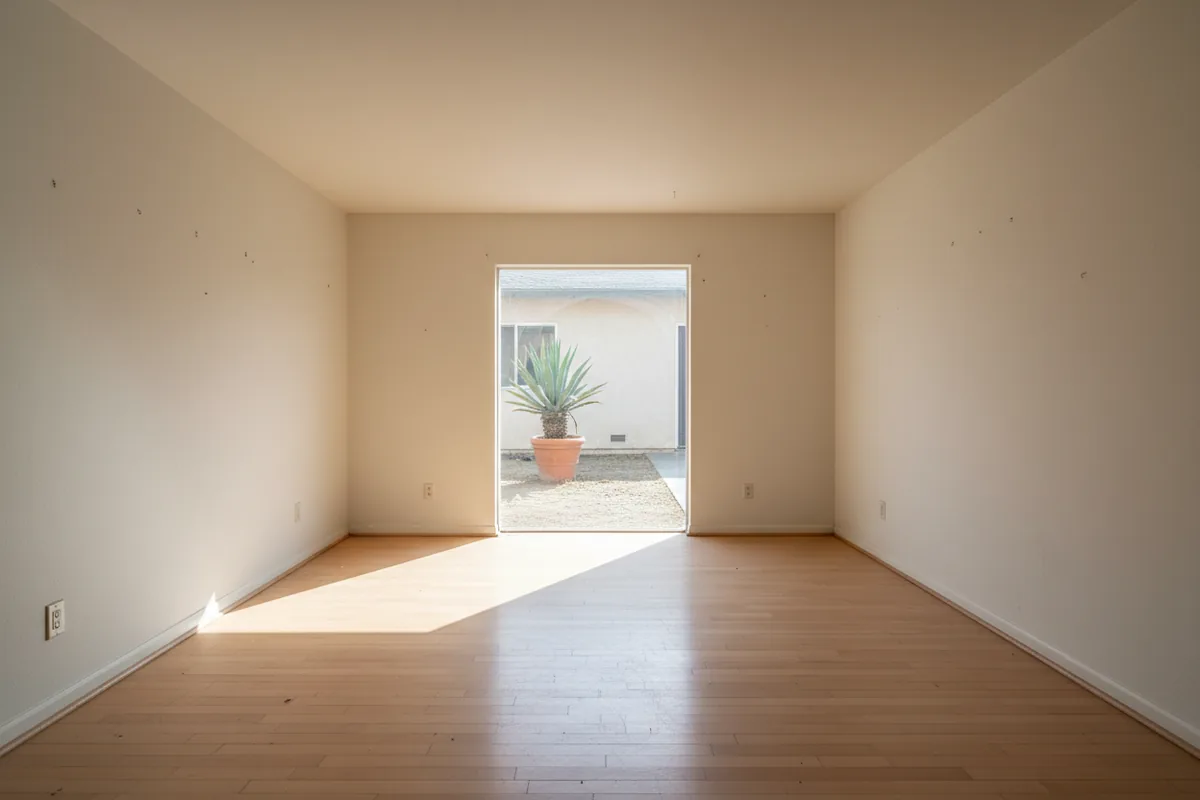
An empty California apartment interior after wildfire evacuation, showing bare walls and floor.
Immediate answer

California renters after a wildfire: how renters insurance, the 24-month living expense floor in Insurance Code § 2060, and federal aid fit together.

On this page
  1. What a Wildfire Claim Means for You as a Renter
  2. What Your Renters Insurance Covers After a Wildfire
  3. California's Living Expense Rules When a State of Emergency Is Declared
  4. Getting an Advance and Listing Lost Belongings Under California Law
  5. Federal Disaster Assistance Available to Renters
  6. When Someone Else May Be Responsible for the Fire
  7. Records That Can Support Your Claim
  8. Questions Worth Asking Before Settling a Renters Insurance Claim
  9. Frequently asked questions
  10. Sources

If a wildfire burned your rented home or made it unlivable, you generally have up to three paths. The first is a claim on your own renters insurance for belongings and living expenses. The second is federal disaster aid if a major disaster is declared. The third is a civil claim against a party believed responsible for the fire.

Most people facing this as a tenant are carrying several worries at once. Everything they owned may be gone. They may be paying for a motel or a friend's spare room. They may not know whether the landlord's insurance helps them at all, and they may be hearing talk about who started the fire. This page explains how each path works under California law, what the statutes say, and where the answers turn on facts that differ from one renter to the next.

What a Wildfire Claim Means for You as a Renter

The first difference from a homeowner is ownership. A renter does not own the building. The landlord's property insurance covers the structure, meaning the walls, roof and fixtures. It does not cover the tenant's furniture, clothing, electronics or the cost of living somewhere else while the home cannot be lived in.

A tenant's own losses usually run through a renters insurance policy. That policy typically carries personal property coverage, which pays for the tenant's belongings that were destroyed or damaged. It also carries loss-of-use coverage, often called additional living expenses, which pays the extra costs of living elsewhere when the rented home is uninhabitable.

A separate path may exist outside insurance. A third-party liability claim is a civil claim against a person or company believed to have caused or spread the fire. It is not a claim against your own insurer, and it rests on proof about how the fire started.

The lease and the security deposit raise their own questions after a fire, such as whether the lease ends, whether rent stops and how a deposit is handled. The answers depend on the lease terms and on California landlord-tenant law, which this page does not cover in detail.

For fires in California, California law governs both the insurance path and the civil path; another state's rule does not decide a California renter's claim. If you are unsure which path fits you, the page on who can bring a wildfire claim explains how owners, renters and families fit in.

What Your Renters Insurance Covers After a Wildfire

The policy itself is the starting point. A renters policy usually has two coverages that matter most after a fire.

Personal property coverage reimburses the tenant for belongings destroyed, damaged or lost in the fire. Depending on the policy wording, the payment may be based on replacement cost or on actual cash value, which accounts for age and wear.

Loss-of-use coverage, or additional living expenses, pays for temporary housing and the related costs of living elsewhere above what the household normally spends. That can include a hotel or short-term rental, and sometimes higher food or travel costs.

What is actually covered comes from the policy's terms, limits and exclusions. The declarations page, the summary page at the front of the policy, lists the coverage limits for each category. Smoke and ash can damage belongings even when flames never reached the unit; whether that damage is treated as a covered fire loss depends on how the policy is written.

For a renter, the stakes are concrete. The personal property limit caps how much replacement the policy will fund, and the loss-of-use terms shape how long temporary housing stays paid. Many renters find it useful to read the declarations page and the loss-of-use section side by side before deciding how to present a claim.

California's Living Expense Rules When a State of Emergency Is Declared

California sets a minimum period for living expense coverage after an emergency. Under California Insurance Code section 2060, when there is a covered loss relating to a state of emergency, as defined in section 8558 of the Government Code:

"coverage for additional living expenses shall be for a period of no less than 24 months from the inception of the loss, but shall be subject to other policy provisions."

The same subdivision provides that the insurer "shall grant an extension of up to 12 additional months, for a total of 36 months," if an insured acting in good faith and with reasonable diligence runs into delays in reconstruction caused by circumstances beyond the insured's control. The statute lists examples, including unavoidable construction permit delays, lack of necessary construction materials and lack of available contractors. It says further six-month extensions "shall be provided to policyholders for good cause."

The section has limits. The coverage remains subject to other policy provisions. An insurer may, in place of living expense payments, provide a reasonable alternative remedy that addresses the condition making the premises uninhabitable. The coverage does not include a utility public safety power shutoff event. Where a loss falls outside those rules but a state of emergency comes with an order of civil authority restricting access to the home because of a covered peril, the statute requires at least two weeks of living expense coverage, with two-week extensions for good cause.

Section 2060 opens by referring to homeowners' insurance policies, and its extension rule speaks of reconstruction. A tenant does not rebuild the landlord's building. So whether and how each part applies to a particular renters policy can depend on the policy and on the statute's wording. If you are displaced, that question shapes how long temporary housing may stay covered, and it is one an attorney can help sort out by reading the policy against the statute. The Common Questions page covers the living expense period in more detail.

Getting an Advance and Listing Lost Belongings Under California Law

When everything is gone, the next question is often whether help can come before the paperwork is finished. California Insurance Code section 2061(a) sets special provisions under a residential property insurance policy for a covered loss relating to a state of emergency. The section applies to claims arising on or after January 1, 2021.

The advance in the statute concerns living expenses, not belongings. If an insured has claimed additional living expenses related to a total loss, the insurer "shall, upon request by an insured, render an advance payment of no less than four months of living expenses." Further living expense payments are then payable upon proper proof after the advance period.

The inventory rules concern belongings. When an insured claims contents related to a total loss of a primary residence, the insurer cannot require a company-specific inventory form if the insured provides an inventory on a form with substantially the same information. The insurer may still seek additional reasonable information. The insurer must also accept an inventory that groups categories of personal property, including clothing, shoes, books, food items, CDs and DVDs, where listing each item separately would be impractical.

For a renter who lost a primary residence, these rules can ease two real burdens: paying for housing right away, and rebuilding a list of possessions from memory. They do not raise any policy limit. The personal property limit still caps what the contents claim can pay, and the advance is part of the living expense coverage, not an addition to it.

Federal Disaster Assistance Available to Renters

Federal aid depends on a presidential major disaster declaration. Under 42 U.S.C. § 5174, the President, in consultation with the Governor, may provide financial assistance to individuals and households who, as a direct result of a major disaster, have necessary expenses and serious needs they cannot meet through other means.

Housing help comes from 42 U.S.C. § 5174(b). It allows assistance for the disaster-related housing needs of people who are displaced from their predisaster primary residences or whose residences are rendered uninhabitable by the disaster. The text speaks of a primary residence, not ownership, so renters are within its reach.

Belongings are addressed by 42 U.S.C. § 5174(e)(2). It allows financial assistance to address personal property, transportation and other necessary expenses or serious needs resulting from the major disaster.

Federal aid does not replace insurance. Under 42 U.S.C. § 5155, no one may receive federal disaster assistance for any part of a loss for which the person "has received financial assistance under any other program or from insurance or any other source." If you are an insured renter, the insurance claim and any federal application interact. Many insured renters pursue both and track what each one pays so the same loss is not counted twice.

When Someone Else May Be Responsible for the Fire

Some wildfires are traced to a person or company, such as equipment that sparked or a fire that was not controlled. When that is the case, a renter may have a civil claim against that party for losses insurance does not fully cover, such as amounts above the policy limits or a deductible.

If you are considering a claim like this, a negligence case in California generally turns on four things you would have to be able to show through evidence. First, that the party owed a duty of care. Second, that it breached that duty, for example through equipment that sparked or a fire left uncontrolled. Third, that the breach caused the fire or its spread and reached your home, which is where records about how the fire began and moved come in. Fourth, the losses that resulted, which is where your receipts, photos and living-cost records come in. A fire, however destructive, does not by itself prove that anyone was careless.

The losses a civil claim may seek track what a displaced renter has actually lost: belongings, the extra cost of living elsewhere, and other losses the fire caused. Insurance payments and a civil claim can overlap, and how they are accounted for depends on the facts and the law that applies. The wildfire lawsuit attorney page explains how a California fire lawsuit is structured.

For a renter, the hard part is that the cause of a fire is often unclear for months. A conversation with our attorney can cover what is publicly known about the fire, which losses insurance has and has not paid, and whether the facts point toward a claim against someone.

Records That Can Support Your Claim

Documents carry much of the weight in both kinds of claim. If you were displaced, the records that usually matter fall into four groups.

Proof of belongings supports the personal property claim. That often means receipts, photos and video taken inside the home before the fire, and bank or credit card statements showing purchases. Online order histories and photos posted to social media can help rebuild a list when paper is gone.

Proof of living costs supports the additional living expense claim. Renters often keep hotel receipts, any lease for temporary housing, and records of food and transportation costs above normal. Records of normal monthly spending before the fire help show which costs are truly extra.

The policy itself matters, including the declarations page showing the limits for personal property and loss of use.

If you are wondering whether someone else caused the fire, official records such as incident information from fire agencies, emergency declarations and notices from utilities may help answer that. How much any one of them helps depends on what it actually states, and an attorney can help sort out which records bear on your losses.

Gathering these records while dealing with displacement is exhausting, and few people have everything. Gaps are common. A claim can still proceed with the records that do exist, though a missing category can leave room for an insurer to push back on that part of the claim.

Questions Worth Asking Before Settling a Renters Insurance Claim

A settlement offer is a decision point. When a renter accepts an insurer's settlement, it resolves the insurance claim for the covered losses. The policy and the settlement or release document define exactly what is given up.

Several questions tend to come up at this stage. Does the offer cover both belongings and living expenses, or only one? Does the release mention claims beyond the insurance policy? Have the living expense rules in section 2060 been accounted for? Does the contents figure reflect the full inventory, including grouped categories?

For a renter who may also have a third-party claim, how the two claims fit together matters before either is resolved. Release language can be broad or narrow, and its effect depends on the exact words. If insurance disputes are part of the picture, the page on wildfire insurance claim disputes explains common points of friction with insurers.

If you are weighing an offer and want to understand what it releases and what it leaves open, you can request a case evaluation to talk it through with our attorney.

Free case evaluation

No Fee Unless We Win Your Case

A free case evaluation is how it starts. Tell us what happened, and we’ll help you understand your options. You pay no fee unless we win your case.

California Wildfire Litigation Group

How it works

  1. Call us or request a free case evaluationTell us what happened, in your own words.
  2. Talk through your caseYour options, and what your case may be worth.
  3. No fee unless we winYou pay no attorney fee unless we win your case.
Free case evaluation

Tell Us What Happened

Frequently asked questions

Does renters insurance cover wildfire damage in California?

A renters policy typically covers belongings destroyed or damaged in a wildfire and includes loss-of-use coverage for living expenses when the home cannot be lived in. What is covered, the limits and any exclusions come from the specific policy. The declarations page lists the limits that apply.

Does homeowners insurance cover damage from wildfires for a renter?

The landlord's policy covers the building, not the tenant's belongings or the tenant's cost of living elsewhere. Those losses are generally covered, if at all, by the renter's own renters insurance policy. The two policies protect different people and different property.

How long does an insurer have to pay additional living expenses after a California wildfire?

California Insurance Code section 2060 sets a floor of no less than 24 months from the start of a covered loss relating to a state of emergency, subject to other policy provisions. Extensions of up to 12 more months, to 36 in total, apply for delays beyond the insured's control. Six-month extensions follow for good cause.

Can a renter get federal disaster assistance after a wildfire?

After a major disaster declaration, 42 U.S.C. § 5174(b) allows housing assistance for people displaced from a primary residence, and 42 U.S.C. § 5174(e)(2) allows aid for personal property and other needs. Federal law bars assistance for any part of a loss already paid by insurance or another source.

Can a renter make a claim against the party responsible for starting a wildfire?

A civil claim against a party believed responsible is separate from an insurance claim. In general, a negligence claim asks whether there was a duty, a breach, causation and damages. Whether those are met depends entirely on the facts of how the fire started and spread.

What records does a renter typically need for a wildfire insurance claim?

Renters often gather receipts, photos, video and bank statements for belongings, plus hotel receipts and temporary lease records for living costs. The renters policy and its declarations page matter too, as do official records about the fire.

Does a renter have to complete a full home inventory before receiving an insurance payment?

California Insurance Code section 2061(a) lets an insured with a total loss of a primary residence use a substantially similar inventory form, and requires insurers to accept grouped categories, including clothing, shoes and books. Separately, an insured with a total-loss living expense claim may request an advance of at least four months of living expenses.

Sources

  1. 01California Insurance Code section 2060 · California Legislative Information
  2. 02California Insurance Code section 2061 · California Legislative Information
  3. 0342 U.S.C. § 5174, Federal assistance to individuals and households · GovInfo (U.S. Government Publishing Office)
  4. 0442 U.S.C. § 5155, Duplication of benefits · GovInfo (U.S. Government Publishing Office)
CallTextFree Case Evaluation