How Your Trees, Crops, Fences, and Outbuildings Are Treated
A single fire can touch several kinds of property on one parcel, and the law does not always treat them the same way.
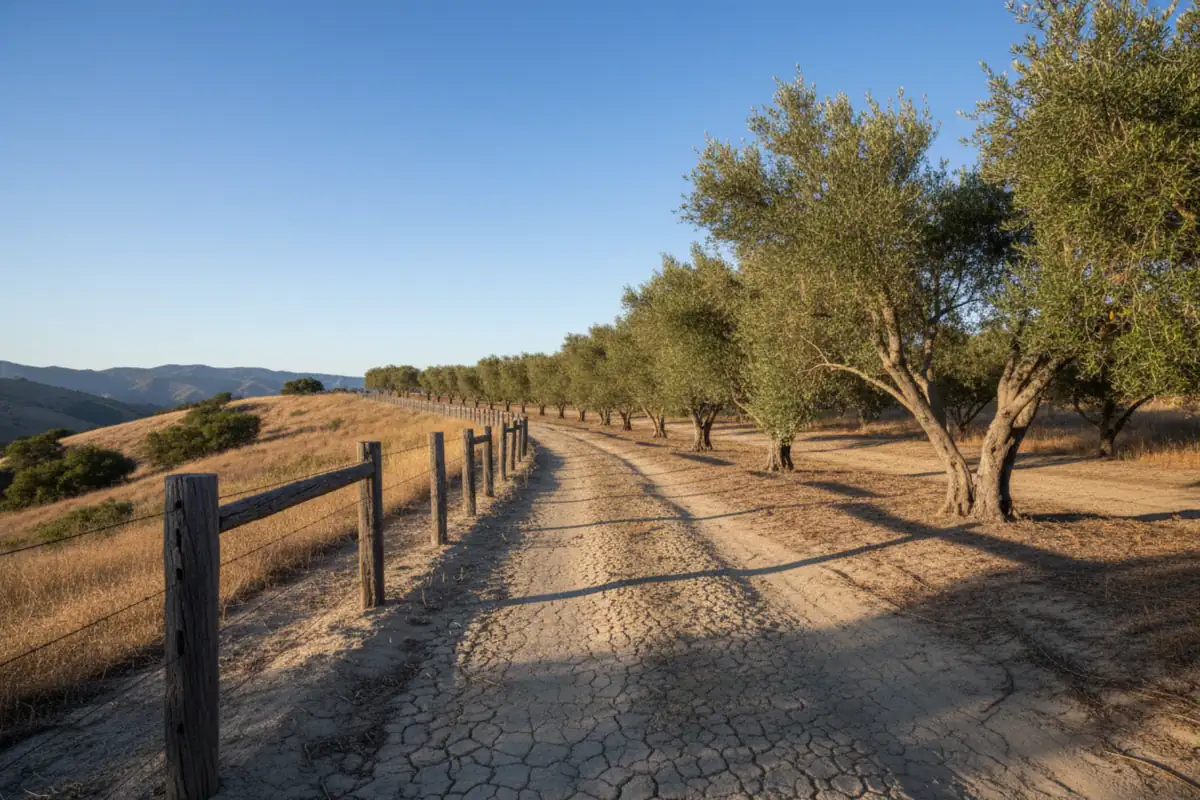
Timber, trees and underwood are the category Civil Code § 3346 names. Where the statute applies, its multiplied measure of damages and its own filing period follow. Where it does not, damage to trees may still be part of a broader claim for injury to the land.
Other injury to the land itself, such as burned ground, damaged grading or destroyed landscaping, falls within Code of Civil Procedure § 338's three-year period for injury to real property. Real property means land and what is attached to it.
Crops are their own kind of loss for a farm or ranch owner. Health and Safety Code § 13007 speaks of "any damages to the property caused by the fire," and a lost harvest may be part of that. How a court classifies a particular crop loss, and which filing period governs it, depends on the facts.
Fences and outbuildings, such as barns, sheds, well houses and corrals, are structures on the land, and damage to them is usually discussed as injury to real property. Equipment, tools and stored goods are different. Section 338 separately lists "an action for taking, detaining, or injuring goods or chattels," the law's term for movable personal property.
If your property had trees, a fence line and a barn, you may be looking at losses in more than one category, each with its own proof, measure and possibly its own window. Sorting the losses by category early can help an owner see which records and which deadlines matter for each, and that sorting is part of what a conversation with an attorney can cover. A family home on the same land raises its own questions, covered on our page about wildfire home damage claims. Income from a farm or ranch operation is discussed with wildfire business loss claims.